
Last week I broke down the maths of the 250 kW solar system going on a commercial property in Thebarton. This week, a confession.I’ve been doling out the same three pieces of advice to people for years: put as many panels as you can on the roof, take advantage of the battery rebate, and don’t buy a battery unless you can get properly backed up. On my own property, I’ve got two of these right, and one wrong.
Put As Many Panels As You Can On The Roof: Check.
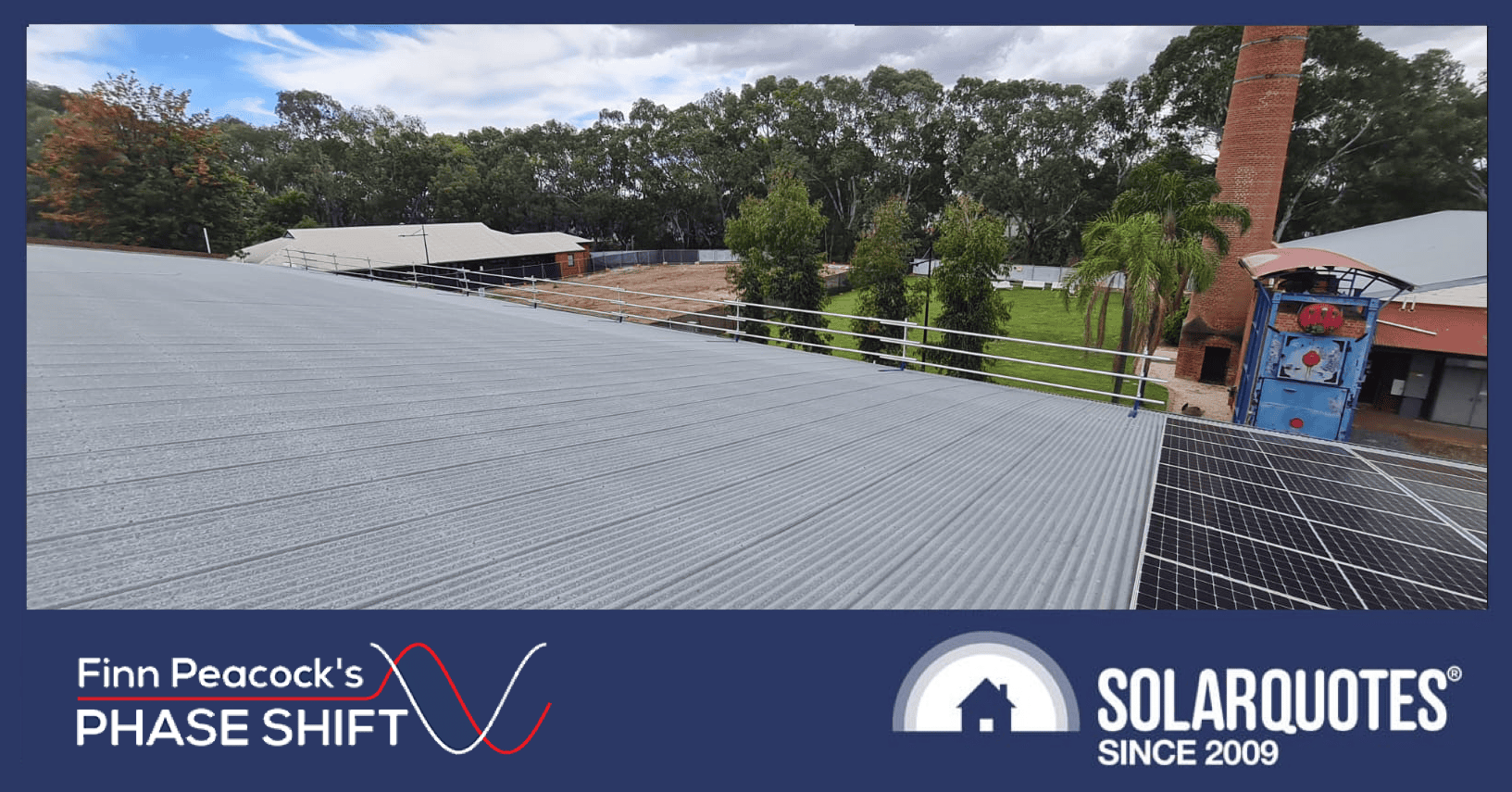
Last year I wrote an article about how we should make solar great again. I’ve also been preaching to the choir about how to get as many panels on the roof as possible, so this building is being covered with 386 panels, totalling 250.9 kW, wherever there was roof not used by the plant and not constrained by the heritage rules.
I’ve got more solar than I can use on this property. It used 285,541 kWh in the 12 months to the end of October, and this system should generate about 329,000 kWh per year. I’ve matched up five-minute data from my meter against the new system model. I’m using 46% of the solar as it’s generated, and another 10% goes through the battery. The other 44% is over-generation, which my business electricity contract doesn’t pay for.
Public holidays are a good illustration of the issue. This property already has a 30 kW system on the roof, which is enough to cover the whole property on Christmas Day, Boxing Day and most long weekends. The meter goes to zero for hours at a time. On those days all 386 of the new panels are going to be over-generation.
Don’t get me wrong, the last few rows of solar panels are not such a great investment. In the model, the first 100 kW of solar panels saves about $24,600 in electricity per year, while the jump from 200 kW to 250 kW is about $1,900.
But I went ahead and filled the roof anyway. Three reasons:
- The new mid-scale rebate pays for a large proportion of the cost of adding more panels. Another 50 kW is about 345 STCs, or about $13k.
- The extra panels will earn their keep in the winter. In June the whole system will generate about 490 kWh per day, against a demand of 770 kWh. Even with the roof fully covered, the property will still consume half its electricity in June from the grid.
- Thousands of medium to high density homes are being built 200m away at the old Southwark Brewery site. Most won’t have solar. Even if I don’t get paid for the exports, it’s nice to think of most of that solar powering those homes. And I’m a soft greenie at heart.
Battery Rebate: Check.
The battery is a Sungrow stack: 99.8 kWh, just 0.2 kWh under the 100 kWh limit of the federal battery rebate.
Rebates are a lot less generous now than they were. Since 1 May, only the first 50 kWh of usable capacity is eligible for STCs, and those are severely tapered after 14 kWh. The stack is eligible for 174 STCs, or about $6,600.
But it’s still worth it. The battery allows me to shift about a tenth of the solar into the evening. It also reduces the property’s summer evening peak demand from 70 kVA to about 50, which takes a chunk out of the demand charges.
Backup? Hypocrite Alert!
In October, I wrote about the madness of buying a solar and battery system without having a reliable and proven backup solution, given the challenges the grid is going through with cyber attacks and extreme weather.
In November, I took my local mountain bike trail’s rock garden and used it to illustrate three different categories of backup solution that installers use:
A-line – The properly designed partial backup system.
B-line – The big battery that backs up everything.
C-line – The tried and true lazy option. The installer can’t be bothered setting up backup, so you’re not getting it.
Sometimes The Lazy Option Is The Right One
I’m going with a C-line solution. When the grid goes down, so will my solar and battery.
There is no affordable B-line in this mountain bike trail. My property peaks at 140 kVA.
The A-line is a massive leap. At home, you can set up a partial backup system by selecting a few appliances for the backup circuit. On a property with 12 tenants, selecting loads means selecting tenants. Who will have backup and who will pay for it? There’s no way I can control what appliances my tenants connect. Load management in a power outage will be a crapshoot.
A properly designed A-line solution would start with an audit: Which loads are responsible for keeping perishables cold? Which processes will cause significant damage if they stop mid-stream? The property contains a brewery. I’m imagining a power outage at the wrong moment could spoil batches of beer. But each of these loads will require its own dedicated circuit and switchgear. Running that through a heritage building and through other people’s tenancies will be wildly expensive and complex compared to a backup circuit at home.
So I’m going with the C-line solution, which is the one I just spent an entire article telling installers not to use. But in my defence, this mountain bike trail has no B-line, and the A-line is a massive huck that I’m too chicken to attempt.
Phase Shift is a weekly opinion column by SolarQuotes founder Finn Peacock. Subscribe to SolarQuotes’ free newsletter to get it emailed to your inbox each week along with our other home electrification coverage.
 About Finn Peacock
 RSS - Posts





Speak Your Mind