
 If you’re building a new home and assuming solar can be sorted out later, there’s something many buyers don’t realise until it’s too late: by the time it becomes a serious conversation, the important decisions may already have been made.
Can You Use Your Own Solar Installer For A New Build?
Builders often bundle solar into the build contract alongside everything else — flooring, lighting, appliances and air conditioning. But unlike most inclusions, solar can become tied to approvals, energy ratings, construction scheduling and site access rules. That’s why homeowners who assume they can simply “sort it out later” sometimes discover they have far less flexibility than expected.
As we’ve covered previously, getting a solar installer involved before the plasterboard goes up can save a lot of regret. In many cases though, the real issue starts even earlier — before the contract is signed.
Sometimes. But once a contract is signed, the builder usually controls the site, the trades and the agreed scope of works.
Before signing, buyers may be able to:
- remove solar from the contract
- negotiate different equipment
- arrange prewiring for future upgrades
- or organise their own installer
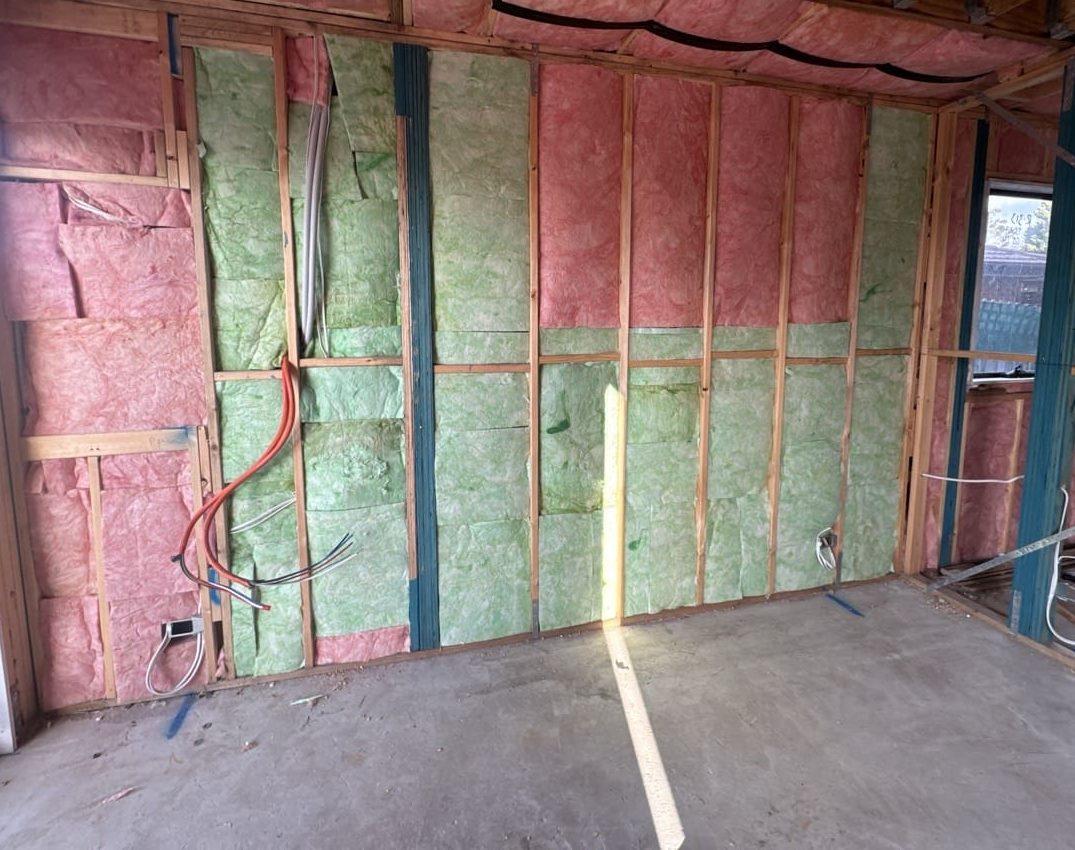
Getting the prewiring for solar right is far easier during the construction phase than later on.
After signing, things get much harder.
At that point, changes usually become contract variations. Builders may also refuse access to outside trades during construction for reasons involving scheduling, liability and warranty responsibility.
So while homeowners are not necessarily “forced” to use a builder’s installer in a legal sense, the practical reality is that the builder often controls what happens once construction is underway.
That’s the part many people don’t realise.
Why Do Builders Prefer Their Own Solar Systems?
Some homeowners assume builders only push bundled solar because it’s profitable. And there can certainly be margin built into these systems.
But there’s also a practical side.
Builders are trying to deliver a completed home on time, pass inspections and avoid delays. Solar interacts with roofing work, electrical rough-in, certification paperwork and final approvals. Using a standard installer and system makes that process simpler and more predictable.
The downside is that “builder solar” is often designed around getting the house finished efficiently, rather than optimising it for future electrification.
That’s one reason some homeowners end up disappointed with small systems that feel outdated quickly.
Are New Homes Actually Required To Have Solar?
This is where a lot of confusion creeps in.
Many homeowners are told solar is mandatory under energy efficiency rules, particularly in Victoria and NSW. But the reality is more nuanced.
New homes must comply with energy efficiency requirements under the National Construction Code (NCC). Depending on the state and design, rooftop solar can help achieve the required rating.
But that doesn’t automatically mean every new home is legally required to have solar panels.
In many cases, solar is simply the cheapest or easiest way for a builder to meet the standard. Better insulation, more efficient heating and cooling, improved glazing or upgraded hot water systems may also be used.
So homeowners sometimes hear:
“Solar is required”
when the more accurate explanation may be:
“This design relies on solar to meet the target rating.”
Why Tiny ‘Compliance Systems’ Keep Showing Up
This also explains why some new homes end up with small solar systems — sometimes around 3kW — even when homeowners plan to electrify heavily later.
If the system is mainly there to meet the energy rating, the builder’s priority is often simply achieving compliance at the lowest cost.
That can leave homeowners with systems that technically satisfy requirements but don’t match how the home will actually be used.
Later upgrades can also become more complicated than expected. A small inverter may need replacing entirely, roof layouts may not suit expansion cleanly, and homeowners can end up effectively paying twice.
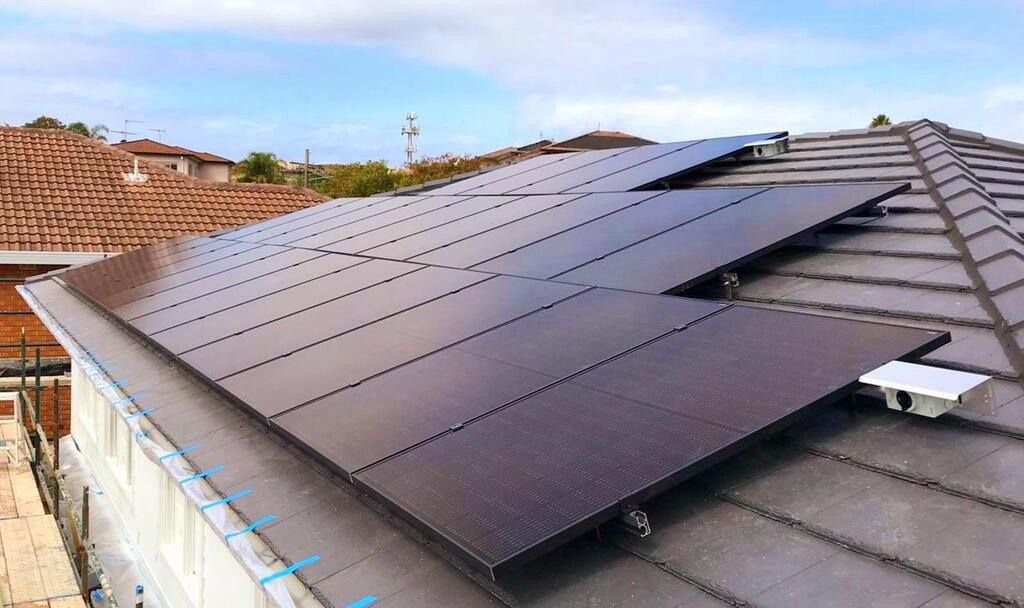
If you’re planning solar on a new build, get it right from the beginning.
The Real Problem Is Timing
A lot of homeowners assume they can sort the solar out later — swap installers, upgrade the system, or replace the builder’s setup after handover.
But by then, the house design, approvals and construction schedule may already be based around that original system.
That’s why experienced installers often recommend getting solar advice early in the building process — ideally before contracts are finalised, not after the roof is on.
Because once construction starts, flexibility tends to disappear quickly.
What Should Homeowners Do?
The best time to think seriously about solar is before signing the build contract.
That doesn’t necessarily mean rejecting builder-installed solar. Some systems may be perfectly adequate. But it does mean getting clear on a few key things early:
- what is included in the build and how much can be changed
- whether solar is required as part of the home’s energy efficiency requirements
- how future upgrades like EV charging or batteries have been considered
Once construction is underway, options tend to narrow. What looks like a simple change can turn into a redesign of other parts of the build or a much more expensive variation than expected.
Don’t assume solar is something you can always “fix later”. Sometimes you can. Sometimes the build has already set the key decisions.
If you’re planning a new home and want to understand how solar fits into the design process before anything is finalised, it’s worth getting advice from installers who regularly work with new builds.
For more on getting solar right, read our deep dive guide on solar panels.
 About Kim Wainwright
 RSS - Posts




All seems to be very good advice,would the same thoughts and considerations apply to a rebuild or a bigger renovation job,Cheers Glenn.
You can either drive the bus or be a passenger. As the driver, you’re more likely to reach your destination even if there are breakdowns.
If I am the paying passenger, the driver or the company he or she drives for, has an obligation to make sure I get to my destination safely. Otherwise the driver may be terminated mid route, Cheers.
Probably the most important part of the design is ensuring the solar and battery system matches the customer’s 24/7/365 consumption profile. [Not only New Builds].
Another issue is that the system should be adaptable to accommodate any changes to the existing pricing model for import Tariffs. This is about how the markets might address the recovery of transmission costs, currently a component in the cost per kWh [imports and exports] from solar systems connected to the grid.
What is trending in Queensland Regional Power Pricing 2025-26, compared with 2026-27, is a reduction in import tariffs, maintenance of no-cost exports, and a material increase in daily fixed fees.
If with Solar and Batteries you have at or near zero imports, depending on the consumption profile, you can reduce the kWh export credit amount that would normally offset the daily fixed fees. So the profile should be a solar system sized to achieve production for total consumption and kWh exports to cover daily fees.
Who is responsible the builder or the solar installer for initiating the solar system helping home owner with apps and making the whole solar experience run smoothly ,and how about warranty what can l do if the installer refuses to attend to any issues with the system cheers.
The entity that takes your money is ultimately responsible for delivering the system, ensuring the customer is trained in how to use it and maintaining all warranties.
The builder is required to attend to all warranty claims for anything included in the house for 2 years. Think this is under the Home Building Act rather than the NCC. Not talking about major defects, they are now only responsible for 6 years.
Our current house was completed two years ago. Unless we installed an on demand gas hot water system (on bottled gas) we had to have solar pv installed. The council made it a condition of the DA.
The system offered by the builder was ridiculously small and we declined the offer.
Luckily the sparky who the builder used, and therefore had access, was paid to do the pre wiring for our system by the company who we had contracted to do the solar pv system. ( He was the first of three subbies the company used, as surprisingly they did not employ any electricians and used a subbies licence for their business. Lol.)
Problems with solar start with roof design, house orientation, block choice and wether the neighbors on your North side decide tall trees on their southern boundary up against the fence are a great idea.
I would now give more serious consideration to a two storey design just for solar access.
I would have thought solar would be a prime cost item if it were the builder was the supplier, or it could be your installer working with the builder [not subcontracted]. In any case, you will be signing off on the system specification.
Builders have no issue dealing with third-party contractors involved in the fit-out. Kitchens, heating and cooling, hot water, powered garage doors, Automation of lights and switches, security cameras and pretty much every other fixture and fitting.
With regard to fixtures and fittings, my preference would be to deal with independent installers [fixed pricing not prime cost] where I could choose the manufacturer of the system, and how it will be supported.
If it is not a trade that they have engaged most will simply not allow them on site.
They can get on site as everyone knows codes to the builders locks. Then you could have to deal with a breach of contract etc.
You are correct, builders have no problem dealing with third party contractors, just as long as they are paying them with your money.
The builder would engage a qualified Electrician, Solar Installer, and Battery Installer. The customer will still have the final say on the product and its specification like everything else that involves the fit out.
I would not contract a builder who leverages a owners right to have access made available as a means to generate income based on keys. Value adding is another business strategy that would not normally create issues.
“The preparation is the most important part of the work” applies universally, I think. And here it really helps to think like an owner-builder.
When architecting my current house, I went for an E-W 25m long shape, with the N-facing roof tilted up 40° for increased winter yield here at 38°S. But it was not until the building inspector was checking the slab that I said “It’s a pity I have a gable on the west, as a 40° hip there would better harvest the late afternoon sun”. “Put in an amendment” was the reply. Two evenings, tweaking nearly all 8 drawing views, allowed 9 W-facing panels. Resubmit & wait a fortnight. Done.
The self-designed solar system admittedly has excess capacity, but off-grid, that’s nice. (29 kWh yield yesterday, in overcast.)
My brother bothered the heck out of a consulting system designer, and spent maybe 50 hrs on the phone with me, while planning his installation. Both meet requirements.
I think OCD wins out here, reliance on others less so. Know your needs!
After all the research I undertook to be able to communicate and understand a Solar professional there is no way I would be putting this sort of trust into a builder’s hand,I wouldn’t be convinced they would know where to put the stickers,Cheers.
The first issue with Solar being used to meet their home efficiency requirements, is that they’ve skimped on something elsewhere.
I’d always recommend that solar is not installed by the builder, and instead meet energy efficiency requirements by better glazing on windows, and ensuring that insulation is installed in walls, underfloor & etc. ceiling infusion should be min R5, and preferably two layers of R2.5 crosshatched, or better.
Windows, wall/floor insulation are notoriously difficult/expensive after the build, and so will probably never be done.
Solar, battery & ev charger provisions should be considered, ie; conduits installed … but homeowners are much better served by obtaining these outside the building contract.
Well done Daniel,our home is done with all the little bits and pieces we all request,any one building now or into the future would benefit from reading your comment,Cheers.
Another option not mentioned in this piece is build sans solar, but design your house with solar in mind e.g. consider roofing angles – multiple ridges or uh hips complicate the layout, a plain ‘box’ design is simplest, but also hated by house designers who want looks! Even a T shape is iffy!
An ‘all on the north face’ option may seem optimal, but requires your design be wide enough to fit, which results in a wide area to be heated by solar energy – probably more good than bad in southern parts of Australia, and more bad than good in northerly parts.
As Daniel Debreceny mentions, installing insulation in walls and ceiling, supported somewhat by double glazing for windows rather than thinner variants, is optimal. The problem is builders rarely know their stuff, and even if they do agree and design around R2.5 walls for instance, there’s no guarantee you’ll actually get it i.e. oops the wall gaps are too narrow for R2.5 you’ll have to make do with R0.5! Better than nothing but …
Its a bit tricky. If you builder manages it hes going to take a cut and therefore it more expensive. Trying to strike a deal with the builder for the system you want rather than what he wants runs the risk of pushing up the price. Depending on the house it may be just as easy to retro fit the system after its been built.
I think if you are confident to manage it yourself with a local company that would work better for me. If you let the builder do the work warranties become more complicated.
I paid a company to do my solar and they subcontracted the installation. When the warranty came it had the subcontractors name on it. The subcontractor will not answer my calls.
Scaffolding is usually need for roof and gutter installation. Use it for anything else while it’s there. Can be $20,000 or more later on as many people with hail damaged panels are finding out. More than the solar replacement.
Beats me why we have no roof access hatches on multi level homes like lust about anywhere in Europe. And a rope hooks or rail at the ridge