
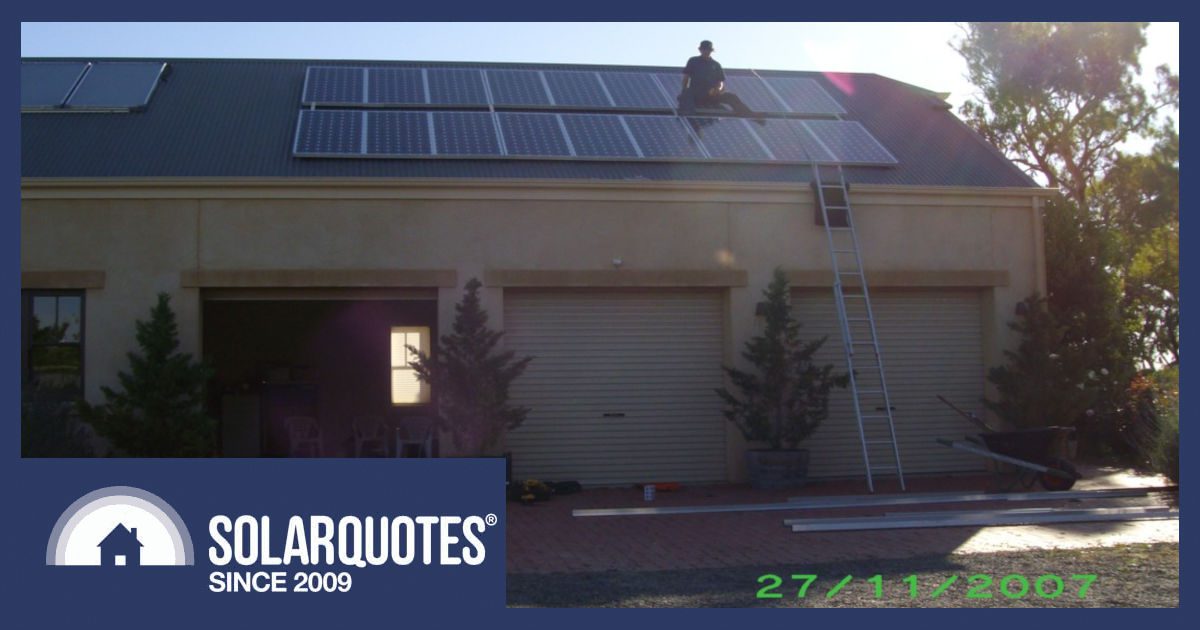
I’m pretty sure that date is accurate, and nearly 3kW of solar was horrendously expensive.
Back when I had long hair, solar was pretty basic, and so were the electricity supply, metering, and billing.
It’s wistful thinking to imagine we’re going back to simpler times. But today, it makes sense to streamline and rein in your bills equally.
Just getting your head around energy and the various ways we pay for it these days is a bit complex. Sadly, the retailers aren’t helping much. Block pricing, flat rate, off-peak, time-of-use, solar soak, shoulder plus demand charges, there are 7 options without even talking about export rates for solar. They know if it’s a bit opaque, you’ll probably give up, just pay the bill and move on with your day.
Once you have a good understanding, though, there are simple choices you can make that will curb your energy bill at a fundamental level. Of course, this means having enough data to make these informed choices, and solar power is excellent for this point alone. Knowledge is powerful, and an app in your pocket gives you both the power and the energy to use it.
Efficiency is KING
While solar power is cheap and some retail plans offer “free hours” around midday, the zero-cost kilowatt hour is the one you don’t have to buy in the first place.
There are a thousand ways to save energy, but even before you do any assessment or planning, one of the best DIY things you can do is just fill gaps, stop drafts, and even do some cheap double glazing.
Hot Water can easily account for 30% of your home’s energy use. While heat pump hot water is arguably a smarter choice than a home battery, I can personally recommend an efficient shower head. Or, much better still, take a shorter shower.
Better insulation is always a winner too, but as we’ve explained before, that can be hard to retrofit.
The heart of the matter is this: no matter the technology or retail plan, using less power will always be cheaper. The trick is to find ways to make it comfortable and, if you can, automate it.
A History Of Gross Consumption
We used to build basic, leaky houses and pour a lot of energy into them to make them bearable. Rules limited the size of post-WW2 dwellings, extended families lived under enclosed verandahs, and the house my parents bought had an extension that was literally a tent. They took 30 years to buy an air conditioner and 25 more to buy the second.
Now we have novelty McMansions, which leak more because they’re oversized, so we plough far more energy into them. In a rich country, most people come to expect whole-home ducted climate control from the outset. Sadly, this demand is understandable because the crap designs of Australian houses mean you couldn’t live without some kind of air conditioning.
The thing is, despite technology becoming cheaper, we still have to put in raw energy. There’s not enough vision here to enact the sort of measures that have flatlined electricity demand in California since the early 1970s.
Enter Solar Power
Average system sizes have grown 10-fold, and prices have fallen even more, to the point where there are increasing instances of South Australia’s entire demand being met by rooftop solar alone.
As we progress toward a cheap, resilient, decentralised mesh of power, it’s not only grid engineers but consumers too who are finding things more complex. There’s some real and understandable fatigue due in no small part to the shell game played by the electricity retail industry.
Punters are keen to reduce expenses. They’ve seen some solar companies make brave claims about “zero bills,” so spending irrational sums of money to get ahead isn’t uncommon. Everyone likes to stick it to the man, but they’re understandably enraged when that investment doesn’t pay off, because the rules change or the goalposts are moved.

Yelling at the clouds, or the retailers, won’t do much, sadly
The Perverse Incentive
I remember when 1 kW systems cost $14,000. They consisted of 1 inverter, 2 cables, 5 wires, and 6 panels. The fastest we ever installed one was with 3 people; it took 45 minutes flat. They would only yield 4.4kWh/day, but offering a high feed-in tariff meant that a small yield would pay a big dividend. Put simply, you would export during the day and buy the power back at night for less than half price.
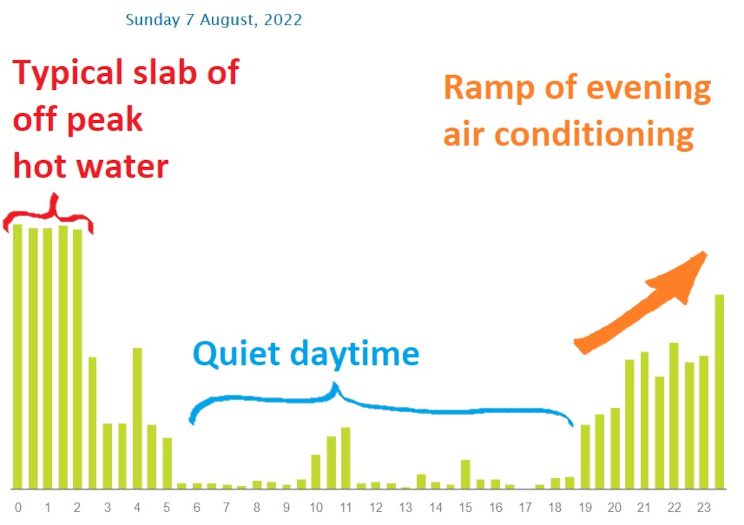
This grid consumption profile would suit a premium feed-in tariff customer. It’s exactly what the grid doesn’t need now that we have lots of solar available.
However, there was occasionally hell to pay. Monitoring systems were uncommon, and if a winking red fault indicator light went unnoticed, the quarterly bill would cause irate phone calls about why this expensive kit was broken. Despite the subsidy, feed-in tariffs took money from people who could afford it and injected that private capital into establishing an industry.
It gave early adopters some real skin in the game. It trained people not to use their own power.
For everyone else who’s benefited from increased scale, competition and lower prices, working out how to use the sunshine when it was falling on the roof for free is the key.
Choice Doesn’t Suit Legacy Electricity
For years, the likes of Origin & AGL would generate kilowatt-hours, and we punters had no choice but to buy them, at whatever rate was going.
You might buy some for cheap, but only after hours. They called it off-peak, which is worth remembering when people wail about the networks controlling things and retailers offering different time-of-use windows.
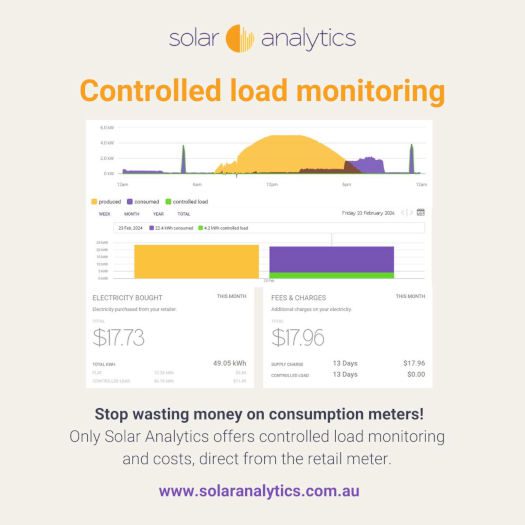
The big yellow bulge of solar yield is where we need to move consumption patterns.
These days, the cheap power is at midday, not midnight, which isn’t the only way solar has broken the business model of legacy energy. Solar means you have some choice in where to get your electrons. Batteries mean your choices are many, and to some extent, the sheer number of options can be paralysing.
There Are Some Golden Rules
Daily charges might suck, but at the end of the day, we’ve all got to contribute, because looking after the least of society is cheaper than letting them fail or sending them to gaol. The power grid is a great public good, like reticulated water, sewers, roads, rubbish collection, and your Medicare card. It’s modern infrastructure that keeps you healthy. So be wary of solar salesmen promising “Zero Bills”
- Nobody can predict tariffs, consumption or legislation.
That’s not to say electricity retailers don’t need to be held accountable. They are known to offer loss-leading contracts to get you to sign on, hoping you’ll not bother to change when the rates revert to something higher after the introductory offer.
- Repay them the favour by changing retailers regularly.
While Solar Analytics is handy, I use a service called BillHero to compare accounts and let me know when to change retailers. They promise to save you more than the subscription costs, but there’s more proof than that. Some retailers have been caught declining service to customers who use an automatic bill-forwarding service.
- We know BillHero works.
Maximise your solar. Panels are so cheap now, you can just put them anywhere, so long as it’s not inside the shed. East, North, and West are great; even South is fine. The correct orientation is simply facing up.
- In 17 years, the only consistent complaint I’ve had from solar customers is “Geez, I wish we’d installed more.”
Batteries can simplify your life. While some people love the idea of trading energy, gaming the retail plans, or turning fat profits, the reality is that most people don’t want to turn electricity into a hobby. A fellow industry traveller of mine actually warns people, his obsession with energy was dragged up in divorce proceedings.
What a battery can really do is remove the anxiety about just when you put the washing on. You can get on with life without setting a timer or forgetting to switch things on or off. The only trap is if you get complacent and your consumption climbs, the battery you bought based on efficient habits may prove inadequate.
- Batteries give you flexibility, but be warned, they’re not a silver bullet.
Remember, you will likely need after-sales support. Buying the cheapest tools from the $5 bargain bin at the hardware shop might seem like a great idea at first, but if something breaks, your $15,000 battery is too expensive to just go in the rubbish.
Ideally, your battery simply recharges with solar every day. If you need to change settings to match a new retail plan and charge from the grid, or even if it’s just a change of telco or a firmware update that breaks something, you want someone available to solve problems. It’s likely a remote monitoring tweak or a site visit to reconnect the internet. Not everyone has highly responsive customer service, but it’s worth knowing if the people taking your money will ask for more when you need assistance.
- Ask your battery installer if they offer a free site visit per year, a maintenance plan or an annual online review.
Knowledge Gives You The Power
Modern solar power with full consumption monitoring is really powerful, but you must make sure it stays connected to the internet, and your app stays up to date to get the most out of it.
I must admit that when we were first installing solar close to two decades ago, the novelty of seeing the old mechanical meter spinning its disc backwards was priceless. It really did make it obvious.
When the solar inverter powers up, it not only meets the consumption, the meter literally turns backwards as power flows back to the grid.
I’m convinced this has always been the best thing about solar power, its ability to change behaviour.
If you’re interested in investigating solar panels and a home battery, get three quotes and start comparing.
 About Anthony Bennett
 RSS - Posts




“These days it’s a bit complex” must be the understatement of the year. Not only do we have to deal with block pricing, flat rate, off-peak, time-of-use, solar soak, shoulder plus demand charges, etc but the energy companies all use the terms differently.
Which means Bill Hero can’t compare correctly any more. The last two recommendations have been completely off, because what my power company calls “off-peak” isn’t what they assume is off-peak.
I have sent them two emails about this but never got a reply so I suspect the whole Bill Hero system is now fully automated and there is no-one home.
Good feedback Alan,
I might ask them myself.
Cheers
Solar orientation is something I wonder about with balcony solar. You say I orientation doesn’t matter as long as it’s pointed up, and I’m sure that’s true for rooftop solar. However, balcony solar is unlikely to at an ideal angle and huge swaths of apartments don’t have north facing balconies. In fact at my complex it’s only it’s only 20%. 40% have south facing balconies including me. An article on how to get the most out of balcony solar would be helpful. I’m skeptical it could ever be worth it for poorly orientated balconies.
Shade makes solar pretty unviable.
We’ll have more to come
Found myself nodding a lot to this one.
Our first 1 kW array cost $20k. $8k from Little Johnny.
The SA PFiT is a great incentive to use less, export more and change behaviours.
And some might consider me obsessed, but incredibly we are still married.
SWMBO is spending some time caring for a friend at the friend’s place and seems reticent to take the Granny charger with her.
I might just go and put it in the boot. 🙂
Thanks Rod
There’s more to come for sure
Tesla Energy entering the Australian electricity retail market could be an interesting development for consumers and the broader energy market.
What I find particularly interesting is that Tesla is not simply entering as another electricity retailer. Its combination of solar, Powerwall batteries, EVs, smart energy management and virtual power plants could allow it to actively influence when households consume, store and export electricity.
If Tesla can successfully use large numbers of connected batteries to shift consumption away from expensive peak periods and absorb excess solar during the middle of the day, it could put pressure on other retailers to rethink their pricing structures, time-of-use rates, battery incentives and feed-in tariffs.
The bigger question is whether this competition will translate into lower overall electricity costs for consumers, or whether retailers will simply restructure their tariffs to reflect the changing wholesale market and network costs.
It will
What struck me about the new Tesla VPP is that they’re reported to be offering a FiT of 90% of real-time wholesale, 5-minute adjusted. That ought to mollify a few of those who complain about derisory FiTs. Having a Powerwall is not required, apparently? A big battery could do fairly well at peak times.
Mind you, I still prefer the $1/kWh FiT-on-wheels that my BEV pays, $18 on Tuesday + $22.90 on Thursday = $40.90 for the week. That made the Level-2 charger free nearly two years ago, and the BEV will be half repaid in a decade, using 100% rooftop solar. (An ICE just piles cost on top of cost, owing you more every year.) Free car fuel is a very nice cost-of-living boost, not least for a self-funded retiree. (An Atto1 BEV is barely $20k now!)
A clothesline instead of a dryer is a cheap energy saver. Taking a load out now.
PS: Morning sun on skin confirms I’m significantly solar energised, getting a lot more done in Spring/Summer. Red light & IR through the shirt can be enough.
So Erik. what are your recommendations of the Atto 1 for $19990 drive away and plug with the V2L and a charger to control the use to the home?
Hi Tim,
Depends if you’re grid connected.
For those that are, even if you have premium feed in tariff, you can take your essential circuits off your power bill using a HOEM inlet socket.
Available now with no network connection permission problems or warranty implications for the car.
For an off grid with 48V batteries you could either employ a dedicated charger or use the inverter/charger you probably already own.
25.5kWh useable for $20k and comes with a free car.
Like Anthony says, probably depends on whether you’re on-grid.
Here, with a pile of panels and a capacious home battery, I just need somewhere to push all the spare kWh, and the BEV yields $1/kWh in FiT-on-wheels. In 2.5 years, even in deepest darkest winter, there’s never been a need to borrow from the car. I do sometimes finish whacking 7 kW into the BEV after sunset, up around 5 kWh from the home battery. That’s probably not normal.
The Atto1 is a super economical commuter vehicle, ideal for transport. Treating it as a home battery is fine for a blackout, but I’m too far out of town to run it down a long way. The 3.3 kW of V2L capacity could handle fridge, freezer, lights, TV – i.e. backup only, I feel. Fire up the microwave as well, then that’s best when the freezer isn’t running.
I’d bank the Atto1 petrol savings, then add more home battery when the piggybank is fat enough. Get enough to avoid peak grid tariffs, when you can. Build savings on savings where possible.
We can outdo the Californians – some Aussies already do. Nearly three years ago, I was late enough to the party to be able to install a larger system than early adopters could. The outcome is documented in a 4-page article in issue 170 of Renew magazine (Jan-Mar 2025), still available on-line, also as a PDF. The title “A Carbon Negative Off-grid Energy Transition” doesn’t mean that it has to be off-grid; on-grid renewables are just as good, and cheaper.
Here, house & car are totally photon-powered, water is also rooftop, and sewage is septic tank, so zero coal-powered services. The excavator is electric – only the rarely used tractor is diesel – around 60L pa, amply CO₂-recouped by my 2 sq km of forest.
If we were intelligent enough to redirect the $1B we smoke out obsolete exhausts every week, we could sooner have cheap motoring, secure food logistics, and a vital balance of trade improvement, as well as higher tax revenue, essential for major climate costs, coming soon.
Hi Erik,
Sounds like we need a weblink for that 😉
Anthony,
It turns out their on-line library: https://renewportal.org.au/digital-library/
is only accessible to subscribers, as far as I can see.
I’ll talk to Lance, the technical editor, to see if we can make the article more accessible – from his perspective, a sample of the wares. Not everyone has spare cash, even for a good cause: https://renew.org.au/about-us/
Dig up a copy and we’ll see if there’s an SQ article to be made from it Erik 😉
I’d say that to fully understand the complex array of deals and plans on offer from the money hungry retailers needs a PhD.
It’s insane, and I’ve yet to find ANY comparison site that really works properly.
And I must also add: what utter imbecile thought it was smart to allow these damned retailers into the system to take a big cut out of our electricity network? As a banker friend once said to me : NEVER EVER allow essential services to be privatised. It’s a licence for them to print money at the consumer’s expense.
Hi David,
A PhD wont help.
Ask Professor Bruce Mountain who studies energy economics in Australia.
Despite having his own university software used to examine retail electricity pricing, which he used to decide his own home electricity plan, found the retailer had removed the deal & put him on the expensive default.
The most qualified bloke in the country still got stiffed by the retail industry.
We should nationalise them all.
One of the few areas that should be nationalised. My mind says that any essentials should be nationalised- health and energy are the biggest ones. Though before that can happen, genuine accountability needs to be installed, and the people must be able to hold politicians personally liable for their failures or outright lies.
Good point John,
A proper public service that plans things would help. And lower reliance on the “big 4” external consultants which have shown to be bent.
For solar we could start by getting rid of the CEC & funding the state regulators to do the job they traditionally did.
Totally agree. I did my back-of-the-envelope calcs & found I was best just buying the cheapest power. I went for low daily charge, then o/p charge, followed by peak. Forget the ´free´ middle of the day offer: they will get you 2x elsewhere! My Essential Energy NSW connection has higher daily charge than most due to the spread of their connections. However, you add to that the manipulation of that charge, where some plans charge you almost double what the plan I am on (I pay ~$1.80/day connection: The worst I saw was over $3! What worries me with the really high peak cost kW charges is if your system fails such as tripping a breaker or such, the costs can be horrendous.
I feel AEMO should do 2 things: The fixed daily charge should be the Wholesaler supplier charge + a reasonable markup to stop this manipulation of rates that make it impossible to compare retail offers. The second is the VPP sale should be a separate contract, not tied to retail power purchase.
Referencing California as a visionary state is … interesting. They have the highest costing power in America bar Hawaii – almost twice the national average! Thus while their demand may have flatlined, is that actually because of ‘visionary’ political measures, or sheer unaffordability?
According to the US Energy Information Administration site, and exchange rates for the past year, Californian power is 48-54c/kWh! Even SA, considered the most expensive state in Australia for power, falls short of this!
Should Australia really copy the worst performing state in the continental states of America, or should it instead follow the lead of Texas, Florida, Nebraska, Tennessee etc which have power for half the cost of California?
The isolated Texas grid has actually overtaken California in their deployment of renewables.
Texans aren’t known for being hippies though, they do it because it’s cheap.
Nice deflection there. Conveniently disregarding the actual question there. I’m all for solar, energy efficiency et al, however ignoring the elephant in the room does no favours to either side of the argument.
California is an objective mess, and their energy policy plays no small part in this (nor is it the only factor at play).
Hi John,
If you’d like to name the elephant we could discuss it. I’m not sure California is a mess though, when despite increased living standards the world’s 16th largest economy manages to flatline per capita growth in electricity consumption.
Some of the less rational media have wailing we’ll all be rooooned by electric cars while ignoring the fact they’ll come with V2G.
https://www.solarquotes.com.au/blog/wp-content/uploads/2026/09/california-ev-demand.jpg
However good news just doesn’t sell newspapers or drive clicks & engagement.
https://www.solarquotes.com.au/blog/wp-content/uploads/2026/09/california-text-message-peak-demand.jpg
California and South Australia share lots of things. Both at the cutting edge of the energy transition, both share similar weather, both have things like wine regions which will be wrecked by an overheated climate.
And both are setting records for running 100% renewable.
If exclusively comparing Wind and Solar, yes surprisingly Texas does have more – 23.2% Wind + 13.7% Solar v 7% Wind + 23% Solar however California has 9% Other (Geothermal, biomass etc) plus Large Hydro 12% so they’re still technically in the lead. Texas and California have about the same Natural Gas, and Nuclear (~40% + 9%) but Texas also has 12.7% Coal and 1% Other Fossil. If generation differences aren’t driving pricing differences, what is?
Frankly I’m surprised by the figures. Then again, it looks like half or more of the large wind farms may be in the western part of the state which is fairly arid. If windmills are one of the few things they can ‘grow’ then what else can landowners do?
Good numbers John,
Thanks for hunting them out.
Hopefully next time they have a cold snap in Texas the gas generators won’t fail, or wont be as important.
Nice that you mentioned, “I remember when 1 kW systems cost $14,000. They consisted of 1 inverter, 2 cables, 5 wires, and 6 panels.”, I am one of those earlyish solar adopters with a 1kW system – 6 x 180w Conergy panels and SMA Sunnyboy inverter, installed March 2008, it was $12,000 list price but Howard and Rudd had the $8000 solar rebate, so I paid $4000. The system is still on the roof and doing the business without complaint. There is no online monitoring, just the little window on the inverter to tap and see the output.
We love these systems.
i am sure Anthony, like me, you still have long hair, it just tends to grow out of orifices now instead of the top of your head…
A lot of truth there – one eventually comes to the realisation, that while you might be able to stick it to the man for a short period, they will always find another way to get you…
The old system where you paid a motza for small systems but got a decent feed in tariff, was almost akin to the grid being your battery.
I have a friend still on a legacy feed in tariff that expires next year sometime. But the last couple of years he has been torn, as the use of electricity in his house has increased and daily charges are rocketing, he has slowly been having to pay power bills for the first time in a lot of years, yet he doesnt want to upgrade his system until he loses the high feed in tariff. I suspect he is already past the point where a new larger system with a decent battery would save him money, but he likes to brag about his feed in tariff !